Seven products in the morning, seven at night. That sounds like a lot, but the whole routine is basically built around two affordable brands, Cetaphil and CeraVe, and the exact order makes all the difference. I have acne prone skin that gets angry when I try anything fancy, so I kept testing this drugstore setup until my face finally calmed down. This is the exact skincare order I use, twice a day, and it works without wrecking my wallet.
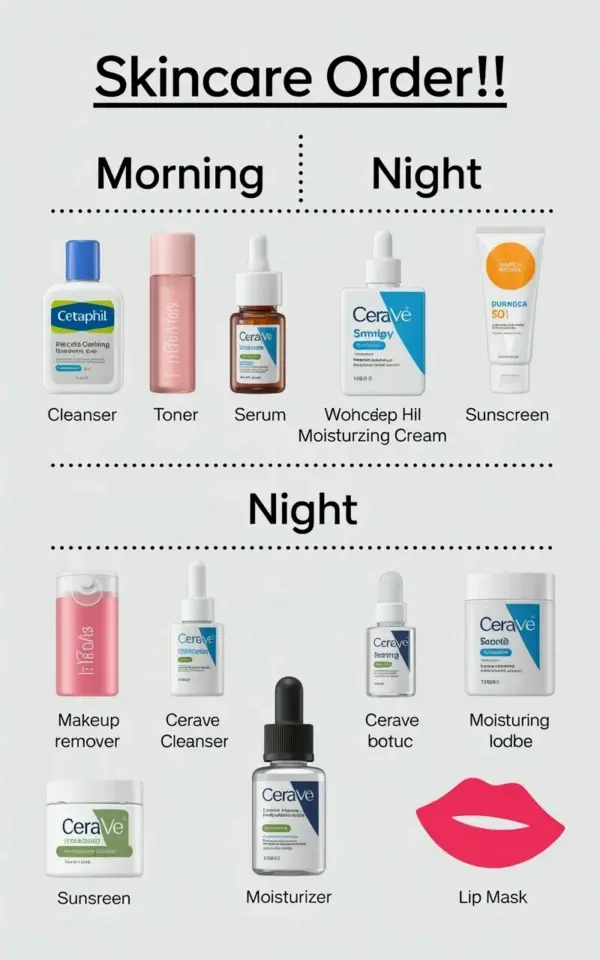
The image that goes with this article lays it all out visually. White background, black text, and those familiar blue and white drugstore bottles. Honestly, seeing the steps laid out in that diagram was the first time I realized I was doing everything in the wrong order. I used to slap on moisturizer before my serum dried, and then wondered why my skin felt sticky. Here is the correct order, starting with the morning routine.
## Morning Skincare Routine in the Right Order
The morning is all about protecting your skin. You are not trying to strip anything away or do heavy repair, you are just prepping for the day. Sunscreen is the non-negotiable final step, and everything before it exists to make sure that sunscreen sits on clean, hydrated skin.
1. **The blue-capped Cetaphil cleanser.** Look, I know washing your face in the morning feels redundant if you washed it the night before. But your skin collects sweat and oils overnight from your pillowcase. A quick cleanse with the Cetaphil Gentle Skin Cleanser is enough. It has that slightly creamy, non-foaming texture that feels like nothing is happening, but it clears away the overnight grime. If your face is feeling dry, you can honestly just skip this step and splash water on your face instead. I do that sometimes when my skin is tight.
2. **A pink-toned toner.** This is where I break from the classic drugstore script a little. The toner in the diagram is one of those hydrating pink toners, not the harsh astringent ones from high school. I use a basic alcohol-free formula that I can get for under ten bucks. I just put a few drops on my fingers and pat it into my damp skin. It wakes everything up and brings a little bounce back to my face after washing.
3. **A white dropper bottle with serum.** I am not a serum snob, but this step is the heavy lifter for the morning. My go-to is a cheap niacinamide serum because it helps keep my sebum production in check throughout the day. The dropper bottle in the image is white, which makes it look fancy, but the contents are usually just a basic, watery hyaluronic acid or niacinamide formula from the drugstore. I press two or three drops into my skin while it is still slightly damp.
4. **The CeraVe blue and white moisturizing cream.** This is the part where people screw up. They think because they have acne, they should skip moisturizer. That is backwards. If you do not moisturize, your skin overproduces oil to compensate, and you get more breakouts. I wait about sixty seconds after the serum, then apply a thin layer of the CeraVe Moisturising Cream. It absorbs well and does not leave that grease-slick feeling.
5. **The white sunscreen.** This is the final boss of the morning routine. The image shows a white sunscreen bottle, and you need to find one that says SPF 30 or higher. I use a lightweight, non-comedogenic formula, which is a fancy way of saying it does not clog my pores. Rub it in like you mean it, and do not forget your ears and neck. I used to skip this step until a derm told me that sun damage makes acne scars worse. Now I never miss it.
## The Perfect Night Routine Starts With the Same Cleanser
The night routine in the diagram starts with the exact same blue-capped Cetaphil cleanser. This is a smart move because you should not be buying a different face wash for day and night unless you use makeup. If you wear heavy makeup or waterproof sunscreen, you might need a separate oil cleanser or micellar water first, but for normal everyday wear, the Cetaphil is enough.
The second step at night is where the routine branches off. When the day is done, your skin is in repair mode, so you switch your products to focus on restoring your barrier. The diagram shows a toner again, but a different texture, one that is more watery and focuses on exfoliation. I use a gentle exfoliating toner containing salicylic acid two or three nights a week. This is my main line of defense against acne care. It clears out the pores that always seem to clog right before an important event.
## Why the Night Serum Is Different From the Morning Serum
After the toner, the night routine pulls out another dropper bottle, but the active ingredient is different. This is where your skin actually heals from the stress of the day. I cycle between a retinol serum and a peptide serum, depending on how irritated my skin feels. Retinol is the gold standard for anti-aging and clearing breakouts, but it can make your skin peel if you use it too often.
Let me be straight with you. If you have never used a retinol before, do not put it on your face every night. Start with once every three days. That is the mistake I made last year. I woke up with a burning red face and spent a week hiding under layers of the CeraVe cream just to recover. Here is the thing about budget skincare: it still has potent ingredients, so you have to respect the percentages.
The night serum gets a full minute to absorb. I usually brush my teeth, floss, and do my double chin exercises while I wait. Okay, that last part is a joke, but I do try to stay busy for that extra minute so I don’t get tempted to apply the next product too soon.
## Moisturizing and Spot Treatments Without Breaking the Bank
The sixth step at night is moisturizing again, but this time you can layer it a little heavier. The CeraVe tub is a classic for a reason. The image shows the blue and white tub, which is the Moisturising Cream, one of the most popular drugstore skincare buys on the planet. I slather a generous amount over my face and neck. If my skin is feeling tight or my barrier is damaged, I put an extra pea-sized amount on top and let it sit.
Now, here is a subtle detail that the diagram almost gets wrong. The spot treatment goes on before the moisturizer, but only if you have a pimple. If you have no active breakouts, skip it. I used to put a spot treatment on my whole nose and chin, thinking it would prevent breakouts, and it just dried out my skin and made the flakiness worse. Apply it just to the angry spots.
The seventh step in the night routine is often skipped by people with oily skin: an overnight mask or a facial oil. The diagram shows a small tube, maybe a lip treatment or a targeted eye cream. I just use plain petroleum jelly on my lips and occasionally the corners of my nose if they are flaking. It is dirt cheap and works better than any luxury lip mask I have tried.
## How to Organize Your Drugstore Skincare Routine on a Budget
You do not need a mini fridge or a shelf full of serums to make this routine work. The total cost for the Cetaphil cleanser, the CeraVe cream, and the other basics is usually under forty dollars. Replace the sunscreen and cleanser every time you run out, but only replace the serums when they actually start to feel less effective.
– **Cleanser:** Cetaphil Gentle Skin Cleanser, approx. $12.
– **Moisturizer:** CeraVe Moisturising Cream, approx. $15.
– **Sunscreen:** Any SPF 30+ drugstore option, approx. $10.
– **Treatment serums:** Generic niacinamide and retinol, approx. $15 total.
The most expensive thing about this routine is not the products, it is the discipline. You have to do it consistently. I kept changing products every two weeks because I wanted instant results, and that made my skin worse. Picking a routine and sticking with it for six weeks is free. That is the ultimate budget skincare hack.
## Common Mistakes People Make With Their Skincare Order
The biggest mistake I see people make is putting the sunscreen on before their moisturizer. Sunscreen is not a moisturizer, it is a protector. If you put it on too early, it gets diluted by the other products and loses its effectiveness. Conversely, if you put moisturizer on after sunscreen, you are just pushing the SPF around and creating gaps in protection.
Another issue is layering water-based and oil-based products in the wrong order. The general rule is thinnest to thickest. This means your watery cleanser and toner go first, then your serum, then your lotion or cream, then your sunscreen. If you start with a heavy cream, the watery things cannot penetrate. It seems like common sense, but most of us just grab whichever bottle is closest.
The last mistake is not waiting between steps. Your morning routine should take about five minutes if you just slather and go. Waiting thirty seconds between each product is enough. Do not obsess over the timing. Obsess over the sequence. That is the part that matters.
## Listen to Your Skin and Adapt
All this information is a guide, not a jail sentence. Your skin might prefer the morning moisturizer to be half the size of what I use. Or you might find that the toner is too drying for the winter months. That is fine. This skincare routine is built for acne care on a budget, but you have to adjust it to your specific climate and skin type.
When I started this routine, my face was a minefield of closed comedones and painful cysts. The doctor wanted to put me on a prescription that was way too expensive. I decided to try the drugstore route first, just to see if it worked. After about a month, the texture of my skin started to smooth out. After three months, my forehead cleared up almost entirely. Do I still get pimples? Yes. But it is one or two manageable spots before my period, not an entire break out across my cheeks.
The diagram in the image is a cheat sheet. Save it to your phone, print it out, stick it to your bathroom mirror. The exact order is written there, and if you follow it, you will get results. You do not have to think, just follow the steps.
Anyone can build a custom skincare routine if they have unlimited cash. The real skill is building one that works with everyday drugstore skincare products. Cetaphil and CeraVe are the foundation of this routine for a reason: they are boring, reliable, and they do not destroy your moisture barrier. Stick to the order, keep the consistency, and let your skin do the rest. I promise you, it is easier than it looks.
Leave a Comment