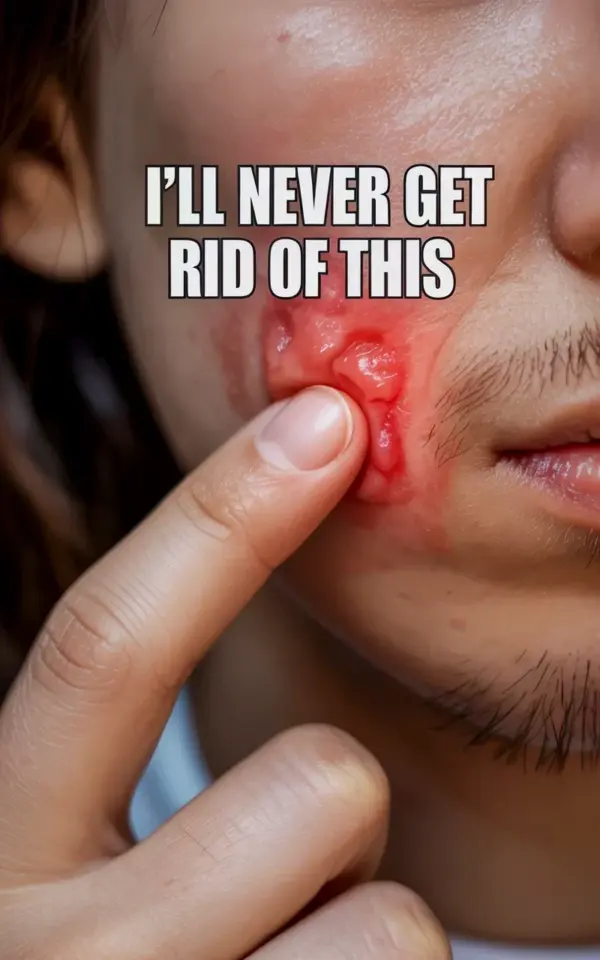
I remember the exact pressure of my fingertip against that hot, swollen bump. The photo in this post captures it perfectly, the way the skin stretched white around the edges right before I squeezed, with that harsh red glow radiating outward. My brain was convinced that getting the gunk out was the only way to make it go away, which is the biggest lie I ever told myself. The journey to my acne before and after started only when I finally admitted that stoppressingpimples was the real problem, not the solution.
Look, that red, inflamed spot in the picture wasn’t just a pimple. It was a crime scene, and I was the repeat offender. The dark background and the harsh lighting in that photo highlighted every bit of angry irritation, but more than that, it highlighted my desperation. That tiny voice in my head that said “I’ll never get rid of this” was loud, clear, and completely wrong.
Why My Acne Care Routine Couldn’t Keep Up With My Fingers
Here’s the thing: I had a decent skincare collection, mostly cheap stuff I grabbed on sale, but it never stood a chance. I would religiously apply a salicylic acid spot treatment at night, only to wake up and pick off the scab the next morning. It was a vicious cycle of damaging my skin and then getting annoyed at my skin for looking damaged.
The worst part wasn’t even the breakout itself. It was the lingering red mark that stayed for weeks after the actual pimple was gone. I used to think I was just cursed with bad skin genetics, but honestly, I was just actively making everything worse. You cannot heal a wound if you keep reopening it, and that’s exactly what popping a pimple does.
Every time I pressed, I was pushing the bacteria deeper. That’s what causes the painful, deep acne that feels like a rock under the surface. I realized I was paying for pimplepopping with scars, not just a few days of redness.
The Moment I Decided to Quit Pimple Popping Cold Turkey
It sounds dramatic, but I had to treat my hands like a bad habit. I still remember standing in the bathroom with harsh overhead lights, leaning so close to the mirror that my breath fogged the glass. The flashlight from my phone was on, and I was just staring at this tiny imperfection that felt like the size of a crater.
I caught my finger hovering for the third time that morning, and I physically stopped myself. I thought, “You don’t know what you’re doing, you’re just making it angrier.” It was like a switch flipped in my head. This acne before and after wasn’t going to happen by accident; I had to be intentional about not touching my face.
To make it easier, I started covering the mirror. No, really. I used a sticky note placed right over the area where I always leaned in to look. If I couldn’t easily see the texture of the bump, I couldn’t obsess over it. It sounds silly, but it broke the visual trigger.
That was the beginning of my actual acne care routine, one that cost me under forty dollars to set up.
My Simple and Affordable Acne Care Routine That Actually Worked
I want to be upfront: I didn’t go to a dermatologist for this. I didn’t buy a fancy prescription cream or a hundred-dollar serum. I walked into a normal drugstore and picked up a few basics that I now swear by. Your pimplepopping habit will never heal until you give your skin a reason to calm down.
It took about two weeks to see a real difference. My skin needed time to stop being inflamed and start repairing itself. Here is the exact routine that changed everything for me:
– **A gentle cleanser:** I swapped out my harsh, minty face wash for a basic CeraVe Foaming Facial Cleanser. It doesn’t strip my skin or make it feel tight and squeaky, which is honestly a weird sensation that means you’ve destroyed your moisture barrier.
– **A plain moisturizer:** I use the big tub of CeraVe Moisturizing Cream. It’s cheap, it lasts forever, and it gives my skin a barrier to work with while it’s trying to heal.
– **A spot treatment:** Instead of squeezing, I dab on a tiny bit of La Roche-Posay Effaclar Duo. It has salicylic acid and it helps dry out the whitehead without me having to physically attack it with my fingers.
The biggest shocker was realizing that my skin wasn’t actually oily all the time. I was stripping it dry, and it was overcompensating by producing a ton of oil. The acne before and after started when I introduced a bit of moisture back into the equation.
How Long Until You See Acne Healing Results?
Ok so, I have to be real with you: the timeline isn’t linear. Some days, my skin looked clear and I felt great. Then, on day three, a new whitehead showed up and I felt like I was back to square one. But I wasn’t. The inflammation and redness from the pimplepopping was starting to fade, and that was the win.
From the moment I stopped pressing pimples, the swelling went down dramatically within forty-eight hours. The active pimples started flattening out after about four days without being picked at. But the dark red marks, those post-acne hyperpigmentation spots, took about three months to truly fade.
A lot of people give up at week two because they don’t see a miracle. But look, your skin takes about twenty-eight days to turn over completely. You need to push through the initial purging phase where your skin is recalibrating. Stick with the routine, keep your hands busy, and just wait. The red blotchy mess in the photo is temporary, but the scars from popping could be permanent.
The Disturbing Reality of What Pimple Popping Actually Does
Let’s talk about the “squeeze” itself, or rather, what happens underneath the surface that you can’t see. When you press a pimple too hard, you don’t just pop the top. You can actually rupture the entire follicle wall, spilling the infected oil deep into the dermis layer of your skin.
This sets off a massive immune response. The skin becomes swollen, hot, and more red than the original zit ever was. That’s why the pimple in the photo looked so angry and agitated; I had been abusing it for two days. The more I pushed, the more it fought back.
Eventually, the pus has to go somewhere. If you force it deeper, it takes weeks to resolve and often leaves a permanent scar. I have a few of those on my chin. The tiny ice-pick scars are impossible to get rid of with over-the-counter stuff. You can’t reverse that damage, so prevention is your only real ally in your acne care routine.
What To Do With Your Hands During the Healing Process
Not gonna lie, the hardest part of the healing process isn’t the products. It’s the idle hand. I used to sit on the couch watching TV and my hand would just wander up to my jawline to feel for bumps. It was an unconscious tick, like a nervous leg tap. The “just looking” phase always turned into “just pressing” within about sixty seconds.
To combat this, I got fidget toys. Specifically, I got a little spinner ring that I can move up and down my finger. It keeps my hands busy and gives them something to play with that isn’t my face. I know it sounds lame, but it worked.
Another weirdly effective tip is to put a pimple patch on any spot that I notice. Hydrocolloid patches are pretty cheap now, especially the generic drugstore ones. I put one on, and it creates a physical barrier. My finger touches the smooth patch, feels that there’s nothing to grip, and I move on. Plus, the patch actually sucks out the fluid overnight, which gives you a visual reward in the morning without the cruelty.
Dealing With the Emotional Side of Acne Before and After
Acne is as much a mental game as it is a physical one. Looking at that photo, I remember feeling unattractive and frustrated. I remember thinking, “Why is this happening to me?” And honestly, feeling that way is normal. You don’t have to force yourself to be positive when your face is hurting.
But here’s the thing I learned: the anxiety of the dark red marks fading actually motivated me to stop. I realized I wasn’t just healing my skin; I was healing my relationship with the mirror. I stopped examining my pores at a microscopic level and started just applying my products without obsessing.
Give yourself grace. There are going to be days when you mess up and you press a pimple. It happens. It doesn’t mean you’ve ruined all your progress; it just means you’re human. Just get back on the routine the next day. The goal isn’t perfection, it’s consistency.
In the span of four months, the difference is wild. The redness is gone, my face has a more even tone, and most importantly, I don’t feel that panic attack rising when I wash my face. The acne before and after isn’t just about physical scars; it’s about reclaiming your confidence.
So, if you’re in that same dark bathroom with the phone flashlight right now, please just put your hand down. Take a breath, and step away from the mirror. Save this post for those weak moments, and trust that stopping the pressing is the first and most powerful step you can take. Your skin will thank you for it, honestly, it took me way too long to realize that.
Leave a Comment